
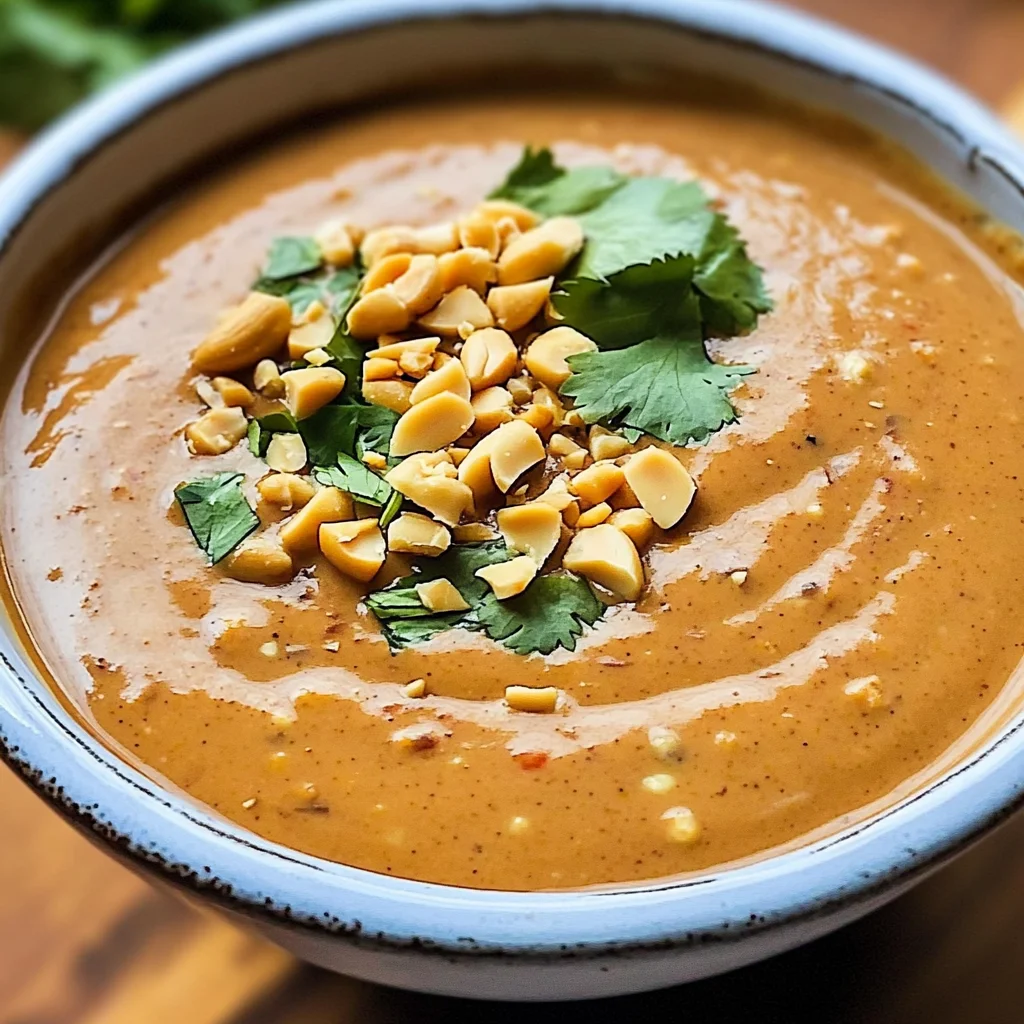
Thai peanut sauce is a rich, creamy condiment that brings an irresistible nutty flavor to any dish. It pairs beautifully with grilled chicken, adds depth to salads, and serves as a perfect dip for fresh spring rolls. This sauce is not only easy to make but also incredibly versatile, making it suitable for various occasions. With its delightful blend of flavors and quick preparation time, Thai peanut sauce is sure to impress your family and friends.
Why You’ll Love This Recipe
- Quick and Easy: With just a few simple ingredients, you can whip up this sauce in just 10 minutes.
- Versatile Uses: Perfect for drizzling over grilled meats, tossing in salads, or serving alongside fresh vegetables.
- Customizable Flavor: Swap out peanut butter for almond or cashew butter for a unique twist.
- Nutritious Choice: Packed with healthy fats and protein, this sauce can enhance your meals without guilt.
- Great for Meal Prep: Make it ahead of time and store it in the fridge for easy access throughout the week.
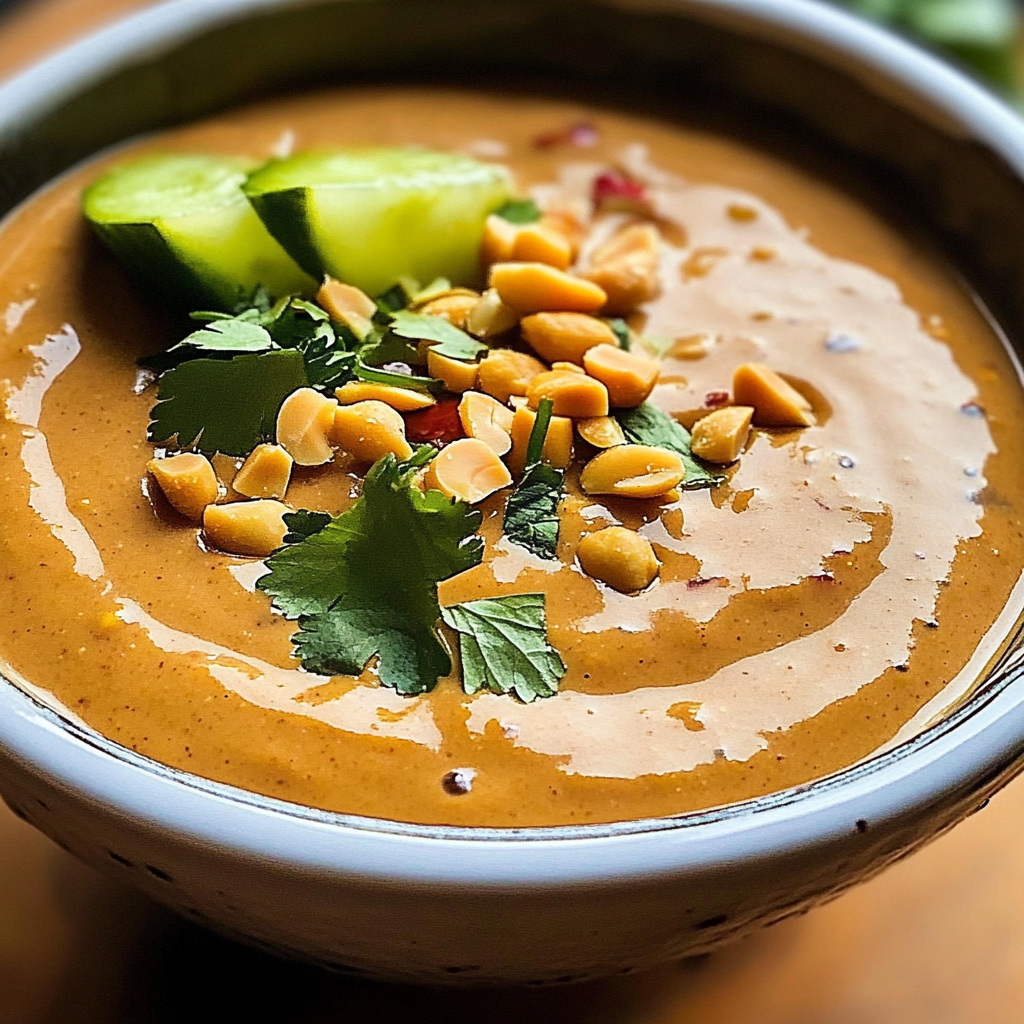
Tools and Preparation
To create this delicious Thai peanut sauce, you’ll need a few essential kitchen tools. Having the right equipment will make your cooking process smoother and more enjoyable.
Essential Tools and Equipment
- Blender or food processor
- Measuring cups
- Measuring spoons
- Citrus juicer (optional)
- Scraper or spatula
Importance of Each Tool
- Blender or food processor: This tool ensures a smooth and creamy consistency by thoroughly blending all the ingredients together.
- Measuring cups: Accurate measurements are crucial for achieving the perfect balance of flavors in your sauce.
- Citrus juicer (optional): Using a citrus juicer helps extract maximum juice from the lime, enhancing the freshness of your sauce.
Ingredients
For the Sauce
- 1/2 cup creamy peanut butter
- 3 tbsp low-sodium soy sauce
- 2 tbsp honey or maple syrup
- Juice of 1 lime
- 2 garlic cloves, minced
- 1 tsp grated fresh ginger
How to Make Thai Peanut Sauce
Step 1: Gather Your Ingredients
Begin by gathering all the necessary ingredients listed above. This will help streamline your preparation process.
Step 2: Blend the Base Ingredients
Add the following ingredients into your blender or food processor:
1. Creamy peanut butter
2. Low-sodium soy sauce
3. Honey or maple syrup
Step 3: Add Fresh Flavors
Squeeze in the juice from one lime and add:
1. Minced garlic
2. Grated fresh ginger
Step 4: Blend Until Smooth
Blend all ingredients until you achieve a smooth and creamy consistency. Scrape down the sides as needed to ensure everything is well incorporated.
Step 5: Adjust Consistency if Needed
If your sauce is too thick, add water one tablespoon at a time until you reach your desired consistency.
Step 6: Taste and Adjust Flavors
Before serving, taste your Thai peanut sauce and adjust any flavors as necessary. You can add more honey for sweetness or extra lime juice for brightness.
Enjoy creating this delicious Thai peanut sauce that enhances any meal!
How to Serve Thai Peanut Sauce
Thai peanut sauce is a versatile addition to many dishes, enhancing flavors and providing a creamy texture. Here are some delightful ways to serve this tasty sauce.
Drizzle Over Grilled Chicken
- This rich sauce adds a nutty flavor that complements the smokiness of grilled chicken perfectly.
Toss into Salads
- Mix Thai peanut sauce with fresh greens, vegetables, and your choice of protein for a delicious salad that packs a punch.
Dip for Fresh Spring Rolls
- Use this sauce as a dip for fresh spring rolls filled with vegetables or shrimp for an irresistible appetizer.
Sauce for Stir-Fried Vegetables
- Stir-fry your favorite vegetables and finish with a generous drizzle of Thai peanut sauce to elevate the dish.
Spread on Sandwiches or Wraps
- Use the sauce as a creamy spread in sandwiches or wraps, adding moisture and flavor to every bite.
Accompaniment for Rice Dishes
- Serve alongside rice dishes, allowing the sauce to enhance the overall taste of the meal.
How to Perfect Thai Peanut Sauce
Perfecting your Thai peanut sauce can make all the difference in its flavor and texture. Here are some tips to help you achieve that ideal blend.
- Adjust consistency: If the sauce is too thick, add water a tablespoon at a time until it reaches your desired thickness.
- Balance flavors: Taste your sauce after blending and adjust sweetness or saltiness by adding more honey or soy sauce as needed.
- Experiment with nut butters: Try different nut butters like almond or cashew for unique flavors while maintaining that creamy texture.
- Add spice: For those who enjoy heat, consider adding chili flakes or sriracha for an extra kick.
- Incorporate coconut milk: For creaminess, mix in coconut milk, which will give the sauce an even richer taste and smoother texture.
- Store properly: Keep any leftover sauce in an airtight container in the refrigerator for up to one week; stir before use.
Best Side Dishes for Thai Peanut Sauce
Pairing side dishes with your Thai peanut sauce can enhance your meal experience. Here are some great options:
- Steamed Broccoli – The mild flavor of steamed broccoli pairs well with the rich peanut sauce, making it a healthy side option.
- Jasmine Rice – Serve jasmine rice alongside to soak up the nutty flavors of the sauce, creating a satisfying combination.
- Cucumber Salad – A refreshing cucumber salad adds crunch and balances the richness of the peanut sauce beautifully.
- Quinoa – Use quinoa as a base for your dishes; its nuttiness complements the flavors of Thai peanut sauce.
- Roasted Sweet Potatoes – The sweetness from roasted sweet potatoes enhances the savory notes in the peanut sauce.
- Grilled Zucchini – Grilling zucchini brings out its natural sweetness, making it an excellent vehicle for dipping into peanut sauce.
- Spring Vegetable Medley – A mix of seasonal vegetables lightly sautéed can add color and nutrition while pairing delightfully with Thai peanut sauce.
- Noodle Salad – A cold noodle salad topped with fresh herbs and veggies offers a perfect contrast to warm dishes featuring this flavorful condiment.
Common Mistakes to Avoid
When making Thai peanut sauce, it’s easy to make small mistakes that can affect the flavor and texture. Here are some common pitfalls to watch out for.
- Using chunky peanut butter – Chunky peanut butter can lead to a gritty texture. Stick with creamy peanut butter for a smooth sauce.
- Overlooking the balance of flavors – If you skip the lime juice or don’t taste as you go, your sauce may lack brightness. Always adjust to suit your palate.
- Not blending long enough – Failing to blend thoroughly can result in an uneven consistency. Blend until completely smooth for the best results.
- Ignoring adjustments for thickness – If your sauce is too thick, it won’t coat your dishes well. Add water one tablespoon at a time until desired consistency is reached.
- Skipping the garlic and ginger – These ingredients add essential flavor; omit them at your own risk! Be sure to include both for a more authentic taste.
Refrigerator Storage
- Store in an airtight container.
- The sauce will last up to one week in the refrigerator.
Freezing Thai Peanut Sauce
- Freeze in ice cube trays for easy portioning.
- Once frozen, transfer cubes to a freezer-safe bag.
- The sauce can be stored for up to three months.
Reheating Thai Peanut Sauce
- Oven – Preheat oven to 350°F (175°C). Place sauce in an oven-safe dish and heat until warm, stirring occasionally.
- Microwave – Heat in short bursts of 15-20 seconds, stirring in between until evenly heated.
- Stovetop – Gently warm in a saucepan over low heat, stirring frequently to prevent burning.
Frequently Asked Questions
What is Thai Peanut Sauce?
Thai peanut sauce is a rich and creamy condiment made primarily from peanut butter, soy sauce, and lime juice. It’s perfect for enhancing various dishes with its nutty flavor.
How do I customize my Thai Peanut Sauce?
You can customize your Thai peanut sauce by swapping peanut butter for almond or cashew butter, adding chili flakes for heat, or incorporating coconut milk for extra creaminess.
Can I make this sauce ahead of time?
Yes! You can prepare Thai peanut sauce ahead of time and store it in the fridge or freezer. Just remember to store it properly for maximum freshness.
What dishes pair well with Thai Peanut Sauce?
Thai peanut sauce complements grilled chicken, fresh salads, and spring rolls beautifully. It’s also excellent as a dipping sauce or drizzled over roasted vegetables.
Final Thoughts
Thai peanut sauce is not only delicious but also incredibly versatile. This recipe allows you to elevate any meal quickly while tailoring it to your taste preferences. Whether you choose to spice it up or keep it classic, this homemade sauce will surely impress family and friends alike!
Thai Peanut Sauce
- Total Time: 10 minutes
- Yield: About 6 servings 1x
Description
Thai peanut sauce is a luscious, creamy condiment that elevates any dish with its rich, nutty flavor. Whether drizzled over grilled chicken, tossed into salads, or used as a dip for fresh spring rolls, this versatile sauce is quick to prepare and perfect for various occasions. Made with wholesome ingredients, it not only enhances the taste of your meals but also adds nutritious value. In just 10 minutes, you can whip up this delightful sauce that will impress your family and friends.
Ingredients
- 1/2 cup creamy peanut butter
- 3 tbsp low-sodium soy sauce
- 2 tbsp honey or maple syrup
- Juice of 1 lime
- 2 garlic cloves, minced
- 1 tsp grated fresh ginger
Instructions
- Gather all your ingredients.
- In a blender or food processor, combine creamy peanut butter, low-sodium soy sauce, and honey (or maple syrup).
- Squeeze in the lime juice and add minced garlic and grated ginger.
- Blend until smooth and creamy, scraping down the sides as needed.
- If too thick, add water one tablespoon at a time until desired consistency.
- Taste and adjust sweetness or acidity as needed before serving.
- Prep Time: 10 minutes
- Cook Time: 0 minutes
- Category: Condiment
- Method: Blending
- Cuisine: Thai
Nutrition
- Serving Size: 30g
- Calories: 100
- Sugar: 3g
- Sodium: 220mg
- Fat: 8g
- Saturated Fat: 1g
- Unsaturated Fat: 7g
- Trans Fat: 0g
- Carbohydrates: 9g
- Fiber: 1g
- Protein: 3g
- Cholesterol: 0mg